
Non Toxic Swaps That Are Actually Easy to Make
For years, "plastic is bad" meant one thing to me: water bottles… and takeout containers. Then I lived in Bali and walked the beach after the tide came in. The trash that washed up wasn't just bottles. It was razors. Toothbrushes. Toothpaste tubes. Shampoo caps. Half of it came straight out of the bathroom, and I had NEVER once thought of all the plastic in my bathroom as part of the problem.
That's the thing about cleaning up your life. There's always another layer.
Non toxic swaps are simple products or habit changes that reduce your exposure to ingredients and materials you'd rather not live with. One thing you should know: "non toxic" is not a regulated or scientific label. Nobody polices it. No product is completely risk free. THE GOAL: is fewer exposures over time, not perfection, and definitely not a weekend where you throw out everything under your sink and cry in a Target parking lot.
You can't overhaul your entire life in a day or a week. You swap one thing, it becomes what you buy, and you stop thinking about it. Your mom always bought Tide, so you bought Tide, until you found out what's IN Tide. Then you change it. The real question is: change it to what? That's THIS LIST. Think of it as a practical path toward a less toxic lifestyle, without the overwhelming part.
My bias, for the record. I started volunteering in hospitals at 15 years old and spent nights shadowing ER doctors and general surgeons who were neighbors and friends. I have a biology degree. I spent my twenties opening a nuclear pharmacy, selling medical equipment to huge hospital systems with cystic acne all over my face, a tall, skinny blonde presenting to rooms full of the C-Suite and wondering how anyone was taking me seriously. I was so insecure about my face. An acupuncturist introduced me to detoxing, and then she introduced me to Dr. Julia Hunter, who has been my dermatologist ever since. That's when I connected the dots between inflammation, my gut, and my skin. I've been in the wellness world for over 23 years and focused on parasites and root-cause health for the last seven.
What actually worked was focusing on what I use every day, in bites, instead of purging the house in one dramatic afternoon. My first swap at home was clean water. I bought a MyPureWater distiller, because water is the thing you put in your body more than anything else, all day, every day.
19 Non Toxic Swaps to Start With
The swaps below are grouped into personal care, cleaning and the home, and the kitchen and food storage. Start with the products you use every day or that touch your skin or your food the most. Those exposures add up fastest. Here's where to begin.
Non Toxic Swaps for Personal Care
Personal care is where I'd start for most people. These products go on your skin, in your mouth, and on your most absorbent tissue, often twice a day. That's the core of healthy living for me: small daily inputs, repeated for years, matter more than one dramatic cleanse.
1. Toothpaste
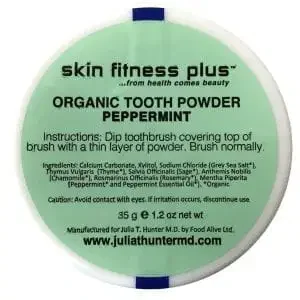
You use it twice a day, on tissue that absorbs quickly, so it goes near the top of the list. Swap conventional pastes loaded with artificial flavors, dyes, and foaming agents for a simple formula with a short ingredient list. I use Dr. Hunter's tooth powder. I break down all my picks in my guide to the best non toxic toothpaste.
2. Deodorant
Frankly, I didn't need deodorant for years. Then I had a miscarriage, and after it, a SIBO flare. Suddenly I needed deodorant again. Gut health shows up in your armpits. Who knew. Look for formulas without added synthetic fragrance, and know that your body odor can be a message, not just a problem to cover up.
3. Body Lotion and Fragranced Products
Body lotion covers more square inches of you than anything else you own, so read that label. Skip anything with "fragrance" or "parfum." I love Alaffia for body lotion.
Perfume is where I'm honest: Le Labo is my one indulgence. It still lists fragrance, so I won't call it non toxic. Some scents hit me harder than others. Baccarat Rouge 540 from Maison Francis Kurkdjian, I feel in my thyroid. Le Labo, I don't. Your body will tell you which ones to drop.
4. Sunscreen
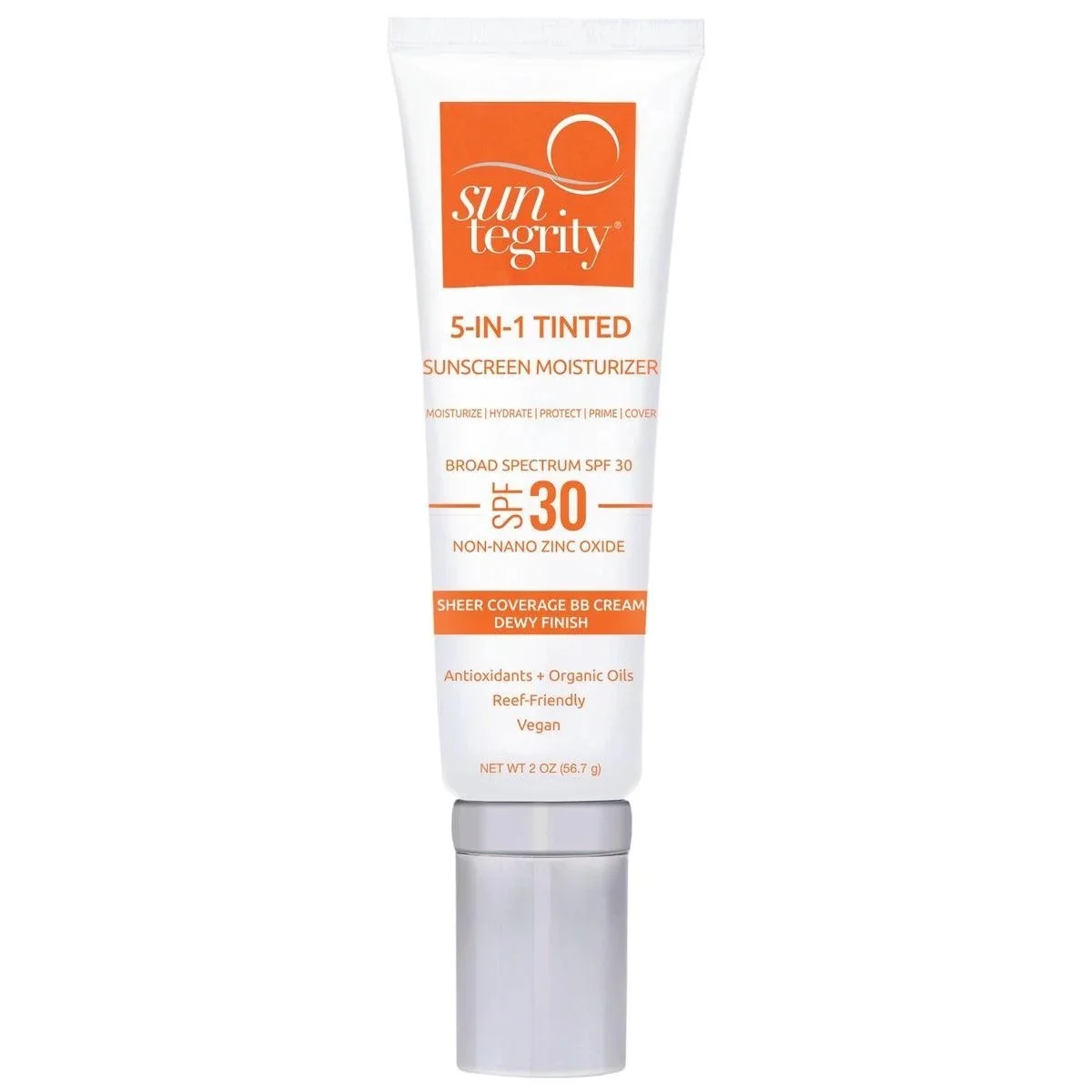
Choose a mineral sunscreen with zinc oxide. The FDA has proposed that only two sunscreen actives, zinc oxide and titanium dioxide, have enough data to be considered safe and effective. I personally stick to zinc only.
Suntegrity (my favorite)
5. Shampoo and Conditioner
A friend of mine did a permaculture course in Bali where nothing toxic was allowed on the property, because whatever you shower with ends up in the water. Everything was easy, she said, until hair care. She couldn't find a shampoo or conditioner that passed. So she cornered the woman on the farm with the longest, most luscious hair and asked what she used. The answer: you can't get around it. Shampoo and conditioner is where everyone cheats.
So aim for better, not perfect. Look for short ingredient lists with no added fragrance, sulfates, or parabens. I use:
6. Feminine Care Products
These products touch some of the most absorbent tissue in your body. A 2024 study found measurable metals, including lead, in every tampon tested. Researchers still don't know whether the metals leach into the body, and organic didn't come out cleaner on every metal. Look for brands that are transparent about materials and testing. My picks:
Non Toxic Swaps for Cleaning and the Home
7. All-Purpose Cleaner
Conventional sprays can release volatile organic compounds (VOCs) into the air you breathe. I can tell the second my cleaning lady breaks out the Fabuloso, because I want to choke myself.
I've used both Branch Basics and Koala Eco. But something about the smell of Koala Eco wins me over. I love how it smells in the kitchen and when I’m cleaning.
Koala Eco (my pick)
8. Laundry & Dishwashing Detergent
When researchers sampled dryer vents during use of a top-selling scented detergent and dryer sheet, they found hazardous air pollutants, including two classified as carcinogens. Choose fragrance-free. I love Truly Free Home.
9. Dryer Sheets
I don't use them. Dryer sheets coat your clothes, which then sit against your skin all day. If you want softer laundry and less static, try wool dryer balls.
10. Air Fresheners and Plug-Ins
I don't do them. Air fresheners don't clean the air. They add scent on top of it, and the EPA lists them as a common indoor source of VOCs. Open a window. Fix the source of the smell.
11. Candles
I've started burning candles again, and I haven't found a brand I love yet. In the meantime, here's what I look for: beeswax or coconut wax instead of paraffin, a cotton wick, and either unscented or scented only with essential oils. I'll update this when I find a winner.
12. Air Purifier
Your air is part of your environment, and you breathe all day. I purchased an Airdoctor YEARS ago, it’s less expensive than the new Jaspr air purifier. But today, I would get a Jaspr if I could. While you're at it, turn your Wi-Fi off at night. There's no reason for it to be on while you sleep.
Non Toxic Swaps for the Kitchen and Food Storage
The kitchen is where plastic hides in plain sight. Heat, fat, and scraping all help chemicals and particles move from your cookware and containers into your food. These swaps are mostly one-time purchases, which makes them some of the easiest wins for healthy living.
13. Nonstick Pans
Traditional nonstick coatings are made with PFAS, the long-lasting chemicals that break down very slowly and now show up in people's blood worldwide. Swap them for cast iron, stainless steel, or ceramic. The Caraway ceramic pans are great.
14. Plastic Food Storage Containers
Swap them for glass. Never microwave food in plastic. Glass doesn't stain, doesn't hold smells, and goes from fridge to oven.
15. Plastic Wrap
Use beeswax wraps or silicone lids instead. Or just put a plate on top of the bowl. Your grandmother did.
16. Plastic Cutting Boards
A 2023 study estimated that chopping on plastic boards could release tens of millions of microplastic particles a year. Switch to wood, and oil it occasionally so it lasts.
17. Dish Soap
It lives on everything you eat off of. I use the Koala Eco dish soap.
18. Water Filter
This is the swap where I've seen the biggest difference with clients. You drink water all day, every day, so the quality of that water matters more than almost any product on this list. I think distillation is the best option, and I use MyPureWater. If a distiller isn't realistic for you, AquaTru is a solid countertop alternative.
19. Plastic Water Bottles
Researchers found an average of roughly 240,000 plastic particles per liter of bottled water, most of them nanoplastics. Fill a stainless steel or glass bottle from your filter instead.
How to Choose Non Toxic Swaps
Marketing words like "clean," "natural," and "green" mean nothing on their own. Here's how to judge a product for yourself:
Read the full ingredient list. The front of the package is advertising. The back is the truth.
Watch for "fragrance" or "parfum." Under U.S. rules, fragrance blends can be listed as one word and protected as trade secrets. That single word can hide dozens of ingredients.
Use third-party resources. I love EWG's Skin Deep database. For cleaning products, look for EPA Safer Choice. For skincare, I lean on Dr. Hunter's Skincare Ingredients to Avoid list.
Swap one thing at a time. If you change everything at once, you won't know what you're reacting to, or what's actually helping. One swap at a time lets you track it.
Swap as things run out. No need to waste what's in the cabinet.
Prioritize what you use daily or what touches your skin or food.
My rule of thumb is to clean up your environment first. Water and air are non-negotiable because you're using them every second. Pure, distilled water. Purified air. Wi-Fi off at night. Next, personal care: anything you use once or twice a day, like toothpaste, cleansers, and body lotion. Then cleaning products. Unless you're scrubbing your counters twice a day (and if you are, we should talk), your toothpaste gets more contact with your body than your all-purpose spray.
Here's how I see it: there's no reason to be good if you can't be bad. I give you the information. You manage your own bucket. Keep the Le Labo if it makes you happy. Just maybe lose the Tide.