
Benefits, Risks, and How Much You Actually Need
If you love being outside, you've probably got whiplash by now. One camp says the sun is trying to kill you. The other camp says get your sunshine, and then half of them run outside at noon and come home looking like a boiled lobster. Neither is very intelligent.
Here's the honest answer: for most people, a little sun is good for you. It helps your body make vitamin D, it helps set your sleep-wake cycle, and it can lift your mood. But the benefits come from moderate sun exposure, not from burning. The right amount depends on your skin tone, where you live, the time of day, and the season.
I have a biology degree and a background in pharmacy and radiation safety, so I tend to look at this through one lens: you can't fight - biology. Below is what sunlight actually does for your body, what the research does and doesn't show, how much sun makes sense, and how I get mine without wrecking my skin… or maybe I am - but someone has to catch those waves!
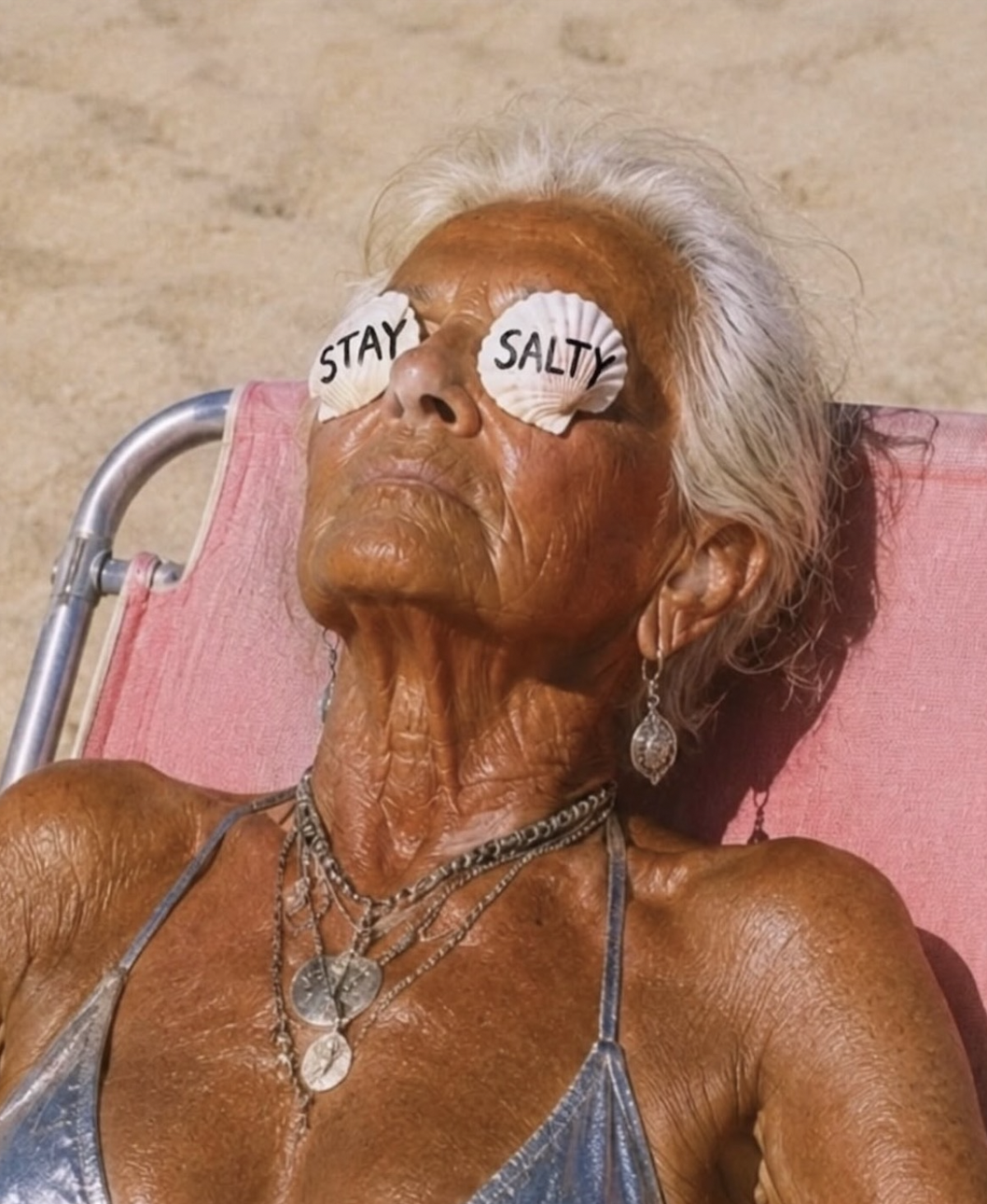
Is a Little Bit of Sun Good For You?
Yes. Short, regular sun exposure has real benefits for most people, and the key word is "little."
The CATCH is that the same UV rays that help your skin make vitamin D also cause sunburn, skin aging, and skin cancer. So the goal isn't to avoid the sun or to bake in it. It's moderate sun exposure, without ever burning.
Everyone heard- OH I need to be in the sun without suncscreen… and RAN outside without thinking!
You should also know that experts don't agree on this. Many dermatologists recommend getting vitamin D from food or supplements instead of the sun, period. My own dermatologist of 20 years, Beverly Hills dermatologist Dr. Julia Hunter, is firmly in the protect camp. In her view, sun breaks down collagen and degrades your skin over time. But she’s also not saying cover up in toxic sunscreen. I respect that, and it's exactly why I'm strategic about which PARTS OF ME see the sun.
My take: get some sun on your body, protect the parts that age fastest, and be the one in charge of the decision. And whenever you read a study, on any side of any health debate, consider the source. Look at who funded it and whether they had a stake in the outcome. That's not paranoia. That's just reading carefully.
What Are the Potential Benefits of Sunlight?
Some of these benefits are well established. Others are still being studied. Here's which is which.
Vitamin D Production
This is the big one, and it's well established. When UVB light hits your skin, it kicks off vitamin D production. Vitamin D helps your body absorb calcium, which makes it essential for bone health. According to the NIH Office of Dietary Supplements, your body makes vitamin D when skin is exposed to sunlight, and food and supplements are the other routes.
What it means for you: a little regular sun is one of the most natural ways to support your vitamin D levels.
Mood and Serotonin
I’ve never met a sad tan person. Sunlight is linked to serotonin levels, the brain chemical tied to mood. Less daylight in winter is linked to seasonal affective disorder (SAD), and light therapy is a recognized treatment for it. If you have symptoms, talk to a doctor.
For me, this one has been life changing. Phoenix and Hawaii are both sunny places, but there is nothing like a full day at the beach in Hawaii. I come home lighter.
What it means for you: the mood link is real, but sunlight isn't a treatment for depression on its own.
Sleep and Your Body's Clock
Research shows morning daylight helps set your circadian rhythm, your body's internal clock. Getting light early in the day tells your brain it's daytime, which helps you feel sleepy at the right time at night and can improve sleep quality. This is well established, and it's the other benefit that changed things for me. When I get outside in the morning, I sleep better. Simple as that.
What it means for you: morning light is the easiest win on this list, and it doesn't require much UV at all.
Immune Function
Vitamin D plays a role in the immune system. That part is known. How much sun exposure actually supports immunity is still emerging research. I notice I feel more resilient when I'm getting regular sun, but this is the benefit to hold most loosely.
What it means for you: interesting, promising, not proven.
How Much Sun Exposure Is Appropriate?
There's no single number of minutes that every person should be in the sun. Research suggests roughly 5 to 15 minutes of midday sun on your arms and legs a few times a week may be enough for many people with lighter skin. People with darker skin tones may need more time, up to 30 minutes or longer, because melanin slows vitamin D production.
This is where personal responsibility comes in. Just like you need to know how many toxins are going into your body so you can manage your own toxic load, you need to know your own skin. These factors change the amount of sun exposure that makes sense for you.
Your Skin Tone
If you're blonde-haired and blue-eyed, your ancestors didn't come from somewhere with a lot of melanin in their skin. You are not built to walk outside at noon and be fine. That's not a flaw. It's biology.
If that's you, build up slowly. My approach is about 15 minutes a day outside of the 10 a.m. to 3 p.m. window to start. UV is lower then, so you make less vitamin D per minute, but you're far less likely to burn. That's the tradeoff, and it's the right one while you're getting started. One thing worth knowing: a tan isn't real protection. Building up slowly is about never burning, not about earning a free pass.
Time of Day and UV Index
UV light is strongest between about 10 a.m. and 4 p.m. Check the UV index on your weather app before you head out. At 3 or above, you burn faster. At 8 and up, unprotected time in the sun gets short, fast.
Where You Live
The farther you live from the equator, the weaker the winter sun. Many people far from the equator make little or no vitamin D from the sun in winter, no matter how long they stand outside.
The Season
Summer sun is stronger and faster. Spring sun can surprise you because your skin hasn't seen much light in months. Start each season slowly.
Your Age and Health
Older adults make less vitamin D from sun. Some medications, including certain antibiotics and acne treatments, increase sun sensitivity. Read your labels and ask your pharmacist.
The goal is never to tan or burn. And the only way to know your actual vitamin D levels is a blood test, so ask your doctor for one.

How to Enjoy the Benefits of Daylight While Protecting Your Skin
Here's how I get the good parts of the sun without the damage.
Get Morning Light
Early daylight helps your circadian rhythm while UV is lower. A walk is the easiest way to do it, and it stacks nicely with how to get more steps in a day.
Plan Outdoor Time Around the Sun
Schedule beach days, hikes, and picnics earlier or later in the day. If you need ideas, here are my favorite things to do at the beach.
Use Shade
Umbrellas, trees, and covered patios let you spend more time outside without more direct UV.
Wear Sun Protective Clothing and a Hat
This is my non-negotiable. I never get sun on my face, neck, or chest, because that's what ages you fastest. I always wear a visor, and I cover up with a sarong or a Betty Pop Tart poncho, my own brand.
Here's a fun one. Ohio State researchers studying Amish communities found lower skin cancer rates, even though many Amish work outdoors all day. The likely reason? Long sleeves and wide-brimmed hats. Sun protective clothing works.
Wear Sunglasses With UV Protection
Your eyes take UV damage too. Look for a label that says UV400 or 100% UV protection.
Use Broad Spectrum Sunscreen
On long beach or hike days, use broad spectrum sunscreen with SPF 30 or higher, and reapply every two hours and after swimming. Sunscreen isn't a reason to spend more time in direct sun. It's backup.
I go zinc oxide only. The FDA currently recognizes just two sunscreen filters, zinc oxide and titanium dioxide, as generally recognized as safe and effective. FDA studies have found several common chemical filters absorb into the bloodstream, and the agency still wants more safety data on them. I skip titanium dioxide too, personally, and stick with zinc. My go-tos are Suntegrity and Dr. Hunter's.
If a chemical sunscreen is all you've got on a big sun day, use it. A burn is the bigger problem. Then wash it off with a clean cleanser at the end of the day. For more swaps, here's my non-toxic skincare routine.
Stay Hydrated
Heat and sun pull water out of you faster than you think. Here are my hydration tips for summer.
Get Vitamin D From Food Too
Fatty fish like salmon and sardines, egg yolks, and fortified foods all help. If your blood test comes back low, ask your doctor whether a supplement makes sense for you.
The sun isn't the enemy, and it isn't a miracle. Get a little, protect your face, neck, and chest, and never burn. For more ways to feel good when it warms up, check out my summer wellness tips.
This post is for informational purposes only and is not medical advice. Talk to your doctor about your vitamin D levels and sun exposure, especially if you have a history of skin cancer, very fair skin, or take medications that make your skin more sensitive to the sun.