
How to Know if You Have Parasites
Parasitic infections have become common knowledge now. It seems like we've finally let go of the idea that parasites stop at the border and stay out of the United States. The recent cyclospora outbreak on lettuce reminded people that we're not immune to them here — not even close.
For a lot of people, they got drawn into their first cleanse because they had what looked like a random pile-up of symptoms. Eczema and constipation. Brain fog and a dairy allergy. A dry cough and IBS. Then they found out these are classic signs of blocked drainage pathways and parasites.
I have a degree in biology, and I'm a Certified Holistic Nutrition Consultant — but the real education came from my own body refusing to cooperate. I had cystic acne for the longest time, plus a dairy allergy I couldn't explain. I chalked up my constipation and gut issues to a brutal high school schedule. Then came the depression. Then the international travel. Oh, and let's not forget the jaw replacement surgery, which had me eating sashimi like a dolphin for a solid chunk of my twenties. And through all of it — every test came back negative.
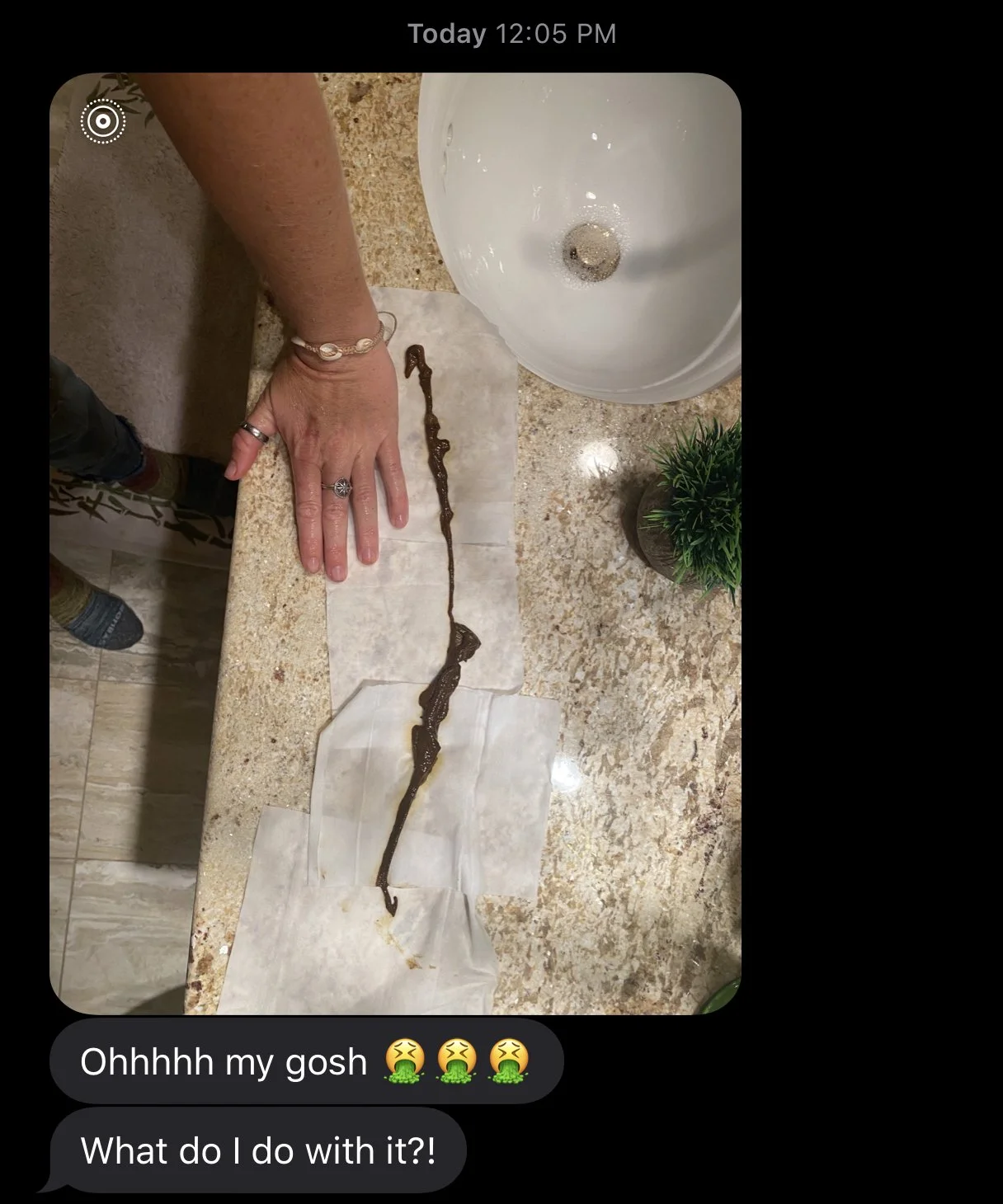
Annually, I'd do a 3-day stool sample — allegedly the gold standard — and it was always clean. I know why now. It wasn't until I got lucky and landed an appointment with an American naturopath in Bali, who literally showed me parasites moving through my blood on a live slide, that I started cleansing. That was 2017. Ever since, I've experimented with different protocols and gone deep into how these organisms operate — how they "express" themselves and show up in the body. I've helped surfers, travelers, and families cleanse, and I've had a client who picked up parasites in the Amazon and had them coming out of her scalp in the bathtub. I don't say that to scare you. I say it because it's more common than the internet wants you to believe.
I don't think you should live a sterile life. I love street food in Asia and I'm not giving that up. My motto has always been: there's no reason to be good if you can't be bad — which is exactly why I cleanse three to four times a year, just to keep the scales balanced.
Understanding the possible signs can help you know when to seek appropriate medical guidance. These signs include (but aren't limited to):
Unexplained constipation, diarrhea, gas, or other digestive problems that read like IBS
A history of traveler's diarrhea after international travel
A bout of food poisoning your digestion never quite recovered from
Trouble falling asleep, or waking up multiple times a night
Skin irritations — unexplained rashes, hives, rosacea, or eczema
Grinding your teeth in your sleep
Aching or pain in your muscles or joints
Fatigue, exhaustion, depression, or a general sense of apathy
Never feeling satisfied or full after meals
A diagnosis of iron-deficiency anemia
Parasites are also notorious mimics — they can present like thyroid disorders, IBS, SIBO, Candida, and more, which is exactly why so many people chase the wrong diagnosis for years. Symptoms can overlap with a long list of other conditions, so this isn't a self-diagnosis checklist. Think of it as a reason to ask better questions and pursue appropriate medical evaluation and testing.
How to Know if You Have Parasites?
So the internet wants me to tell you that the only way to confirm a parasitic infection is through appropriate medical evaluation and testing. And technically, that's true. But in my experience, these organisms have thousands of years of hiding expertise, so the real proof is in the pudding — how you feel, what you see come out of you, and what shows up in autopsies. Autopsy data has shown traces of parasitic visitation in nearly every tissue of the body. Standard labs only run blood tests and stool tests for about 50 species, which is roughly 5% of the parasites capable of infecting humans. Dr. Timothy Ray's research suggests 99.9% of Americans carry some form of parasite, broken down roughly as:
~1 billion people with nematodes (roundworms)
~1 billion people with protozoa — single celled organisms like amoebas
~500 million people with arthropods (insects)
~300 million people with cestodes (tapeworms)
~300 million people with trematodes (liver flukes)
There's no harm in getting tested. But in my experience, standard blood tests and stool tests result in a false negative more often than not. What you'll usually see instead is high eosinophils — a sign your body is fighting an infection or allergy, but not proof of what it is — along with high basophils, low ferritin, and low globulin. All of which, on their own, could point to almost anything. That ambiguity is exactly why symptom pattern recognition matters so much in this work.
Symptoms vary wildly depending on the specific parasites involved, and plenty of these signs have other causes entirely. That said, I've watched parasite removal do remarkable things for people who'd been stuck for years.
What Are Parasites?
A parasite is any organism that lives on or inside a host and survives at the host's expense — using your body for food, shelter, and reproduction while giving nothing back. In humans, they generally fall into two broad camps: intestinal parasites, which set up shop in the digestive tract and interfere with digestion and nutrient absorption, and single celled organisms (protozoa), which can migrate well beyond the gut into the bloodstream, tissues, and organs. Depending on the species, parasites can affect the liver, lungs, muscles, skin, and even the brain — which is part of why symptoms can look so different from person to person.
Types Of Parasite Infections
Protozoa — single celled organisms like Giardia and amoebas, often picked up through contaminated water
Nematodes (roundworms) — including pinworms and hookworms
Cestodes (tapeworms) — frequently linked to undercooked meat
Trematodes (liver flukes) — often tied to freshwater fish and certain undercooked meats
Arthropods — including mites and other insect-related parasitic infections
What Causes Parasites In The Body?
Eating undercooked meat or raw fish
Drinking or swimming in contaminated water, especially in high risk areas
International travel, particularly to regions with less regulated food and water safety
Contact with contaminated soil, including walking barefoot outdoors
Not washing your hands after using the bathroom, gardening, or handling pets
Close contact with pets who carry their own parasite load
A compromised immune system that can't keep parasite populations in check
High amounts of heavy metals, viruses and toxins
How Do Parasites Affect The Body?
Digestive system. Many types of parasitic organisms attach to the intestinal wall, where they can trigger inflammation, bloating, constipation, diarrhea, and general digestive problems that mimic IBS or SIBO.
Nutrient absorption. Parasites are opportunists — they consume red blood cells, vitamins, and minerals before your body gets the chance to. Over time, this can show up as unexplained weight loss, anemia, or fatigue that doesn't respond to more sleep or better food.
Immune system response. Your immune system is constantly working to keep parasite levels in check, which can leave it depleted and less able to handle everything else — allergies, skin flare-ups, and that low-grade "always getting sick" feeling.
Different infections affect the body differently. A tapeworm picking up nutrients in your gut is a very different experience than a protozoan infection circulating through your bloodstream, which is part of why the symptom list is so broad.

What Are Signs Of Parasites In Your Body?
The most commonly reported signs include digestive issues, skin irritation, disrupted sleep, joint or muscle aches, fatigue, and a diagnosis of iron-deficiency anemia. If you've traveled internationally and had traveler's diarrhea, or you have a history of food poisoning your gut never bounced back from, that's worth paying attention to as well. Again — these symptoms are not proof of infection. They're a reason to seek appropriate testing and work with someone who understands how to read the full pattern, not just a single lab value in isolation.
What To Do If You Have Parasites?
Get evaluated properly. Start with blood tests and stool tests through a provider you trust, understanding that standard labs only screen for a narrow slice of possible parasites — so a negative result isn't the end of the conversation.
Ask about a tape test if pinworms are suspected. This simple, at-home method can catch what a stool sample often misses.
Work with a qualified practitioner - Like Me! Whether that's a physician, naturopath, or certified wellness consultant, find someone who treats symptom patterns as real data — not just something to dismiss because a single lab came back clean.
Consider a structured cleanse. Once you and your practitioner have a clearer picture, cleansing protocols exist specifically to support the body through this process. If you want the full breakdown of how I approach it personally, I wrote up How to do a parasite cleanse.
Bottom line: parasitic infections are common, underdiagnosed, and often missed by the tests we've been taught to trust blindly. You don't need to panic or live in a bubble — you just need to pay attention to your own patterns, ask better questions, and know that "negative" isn't always the full story.
If you’re wondering if fasting can kill parasites, read this guide before trying any parasite-related protocol, and learn about the one I personally use.